
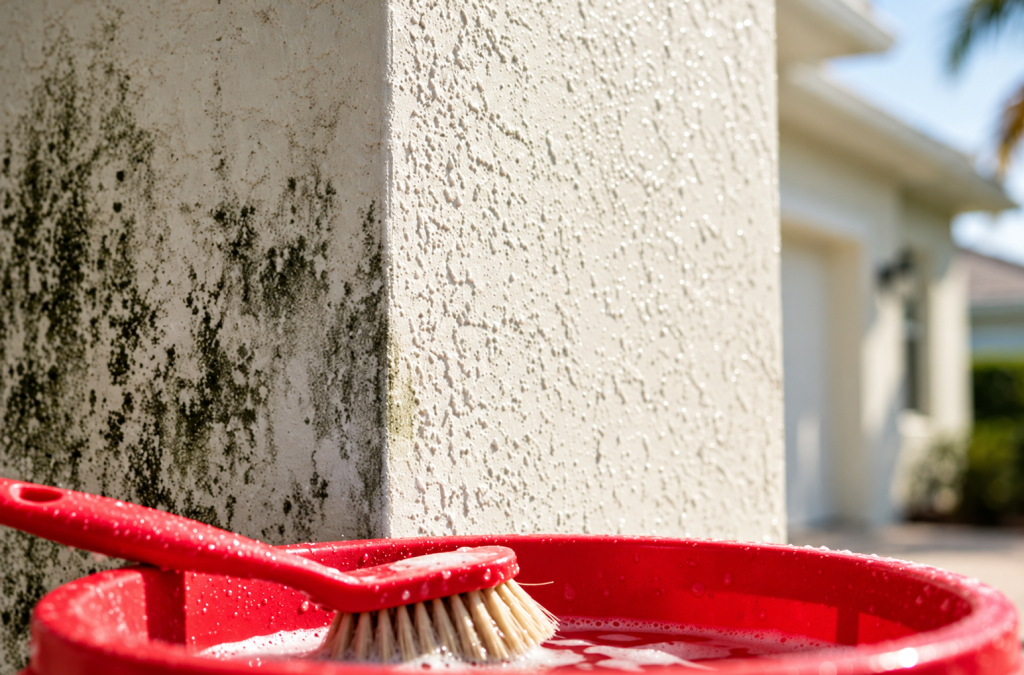
A fresh coat of paint won’t solve mildew that remains on the wall. If you plan to remove mildew from stucco before repainting, gentle cleaning and a dry, sound surface matter more than scrubbing harder.
Florida’s humidity can leave shaded exterior stucco walls stained between paint jobs. You can remove mildew from stucco in a small, accessible area yourself, but cracks or signs of water intrusion need attention first. If you spot damage, Curb Appeal Pros can assess it as part of an estimate for stucco repair.
Why Mildew Needs Attention Before Painting
Stucco siding has a textured finish, and the stucco surface can hold dirt and moisture in small grooves. Dark or green patches may be mildew or other growth, especially under eaves, near landscaping, or on walls that receive little sun. A stain alone won’t tell you whether moisture has reached behind the finish.
Painting over visible growth leaves contamination on the surface you’re trying to coat. Cleaning also gives you a chance to find loose paint, cracks, and damaged patches that a new color might hide for a while.
The order matters: check the wall, clean it gently, address damage, let it dry, then repaint. If a dark patch returns soon after washing, investigate the moisture source before opening a paint can.
Inspect the Stucco Before You Get It Wet
Walk the area in daylight before setting out a hose. Look closely around windows, doors, hose bibs, rooflines, and the bottom of the wall, where water can collect or enter through gaps.
Know What a Small Cleaning Job Looks Like
A limited patch of surface staining on firm, intact stucco is a reasonable place to start. Press lightly near the stain. The finish shouldn’t feel loose, shed material, or move under your hand.
Also check the surrounding paint. Peeling or bubbling can turn a simple wash into a broader paint-preparation project. Take a photo of any suspicious area before cleaning so you can compare its condition afterward.
Pause for Cracks or Water Damage
Don’t spray water into stucco cracks, missing sections, or gaps around trim. Watch for crumbling stucco, bulges, persistent dampness, and stains that seem to show water damage coming through the wall rather than sitting on its surface.
A quick patch isn’t enough if water is still entering. Curb Appeal Pros assesses damaged areas, prepares them for repair, and works to blend the new texture with the existing finish. That assessment helps determine whether a small section needs patching or a larger area needs attention.
Choose a Mild Cleaning Solution and Soft Tools
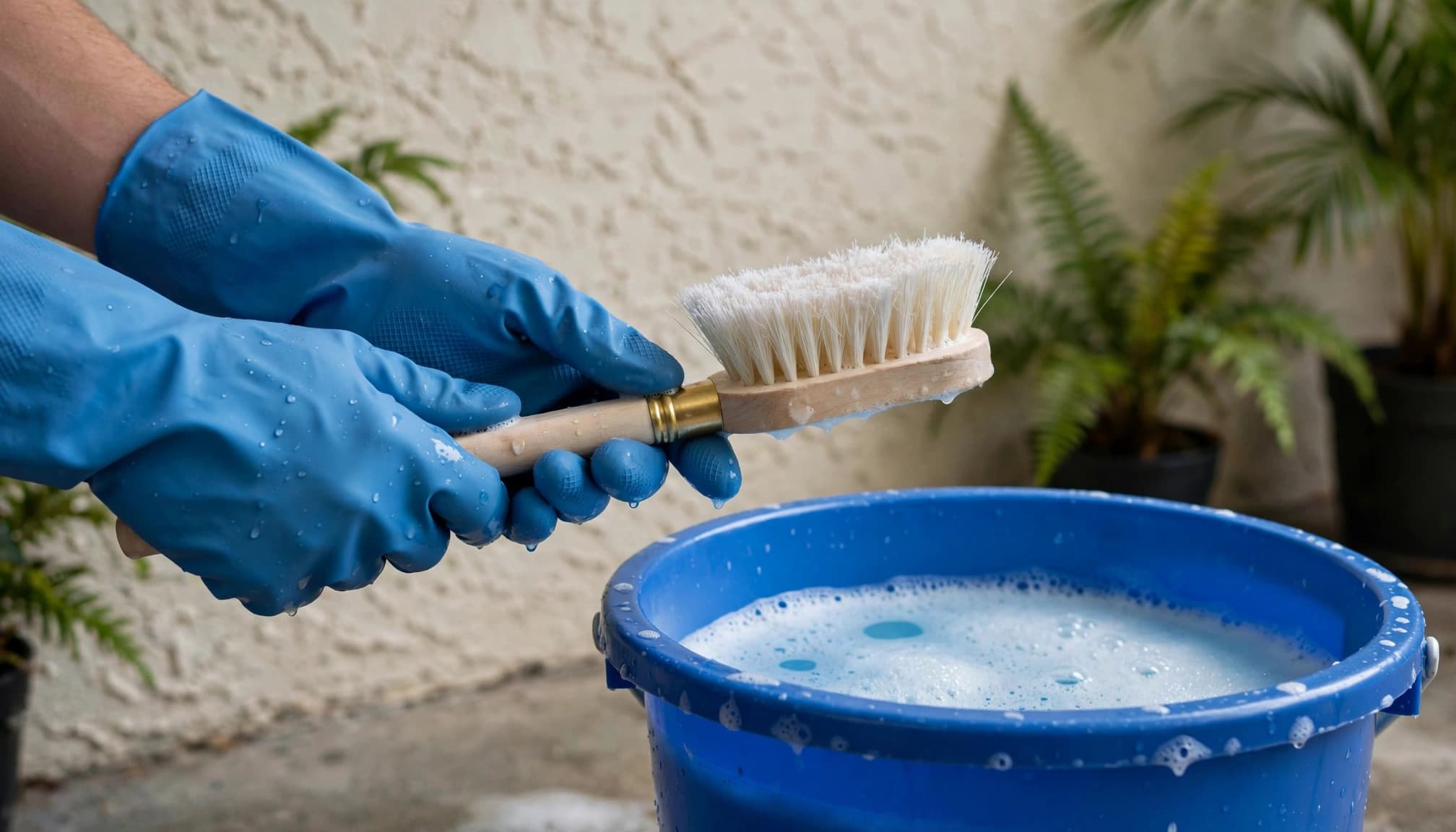
Start with water, a garden hose, a soft-bristle brush, and a mild cleaning solution. Dish soap is an option only if it’s suitable for exterior surfaces. Choose a stucco cleaner intended for exterior cleaning, and check its label for compatibility with your wall finish and nearby painted surfaces.
Start With the Gentlest Cleaner
Before cleaning stucco, test the product on a small, inconspicuous area. Older paint, repairs, or specialty finishes may react differently.
A soft brush can reach the texture without scraping away the finish. Skip a wire brush and abrasive pads, which can roughen the wall and turn cleaning into a repair job. Baking soda isn’t automatically safe for every finish, and stronger scrubbing may not remove a stubborn stain.
Treat Bleach as a Separate Product
Bleach isn’t the default choice for every dark stain. The EPA’s advice on bleach and mold warns against mixing chlorine bleach with ammonia-containing cleaners because the combination can produce toxic fumes. Don’t improvise a bleach and water mixture or combine bleach with vinegar or other cleaning products.
If you use a cleaner intended for exterior mildew, follow its label and the stucco manufacturer’s instructions for dilution, protective gear, application, and plant protection. Never improvise a stronger mixture to speed up the work.
How to Remove Mildew from Stucco Without Damaging It
Work on a manageable section at a time. The goal is to remove visible growth and leave clean stucco without damaging the finish.
- Clear the area. Move outdoor items away from the wall. Follow the cleaner’s directions for covering or wetting nearby plants, and keep runoff away from places where it shouldn’t drain.
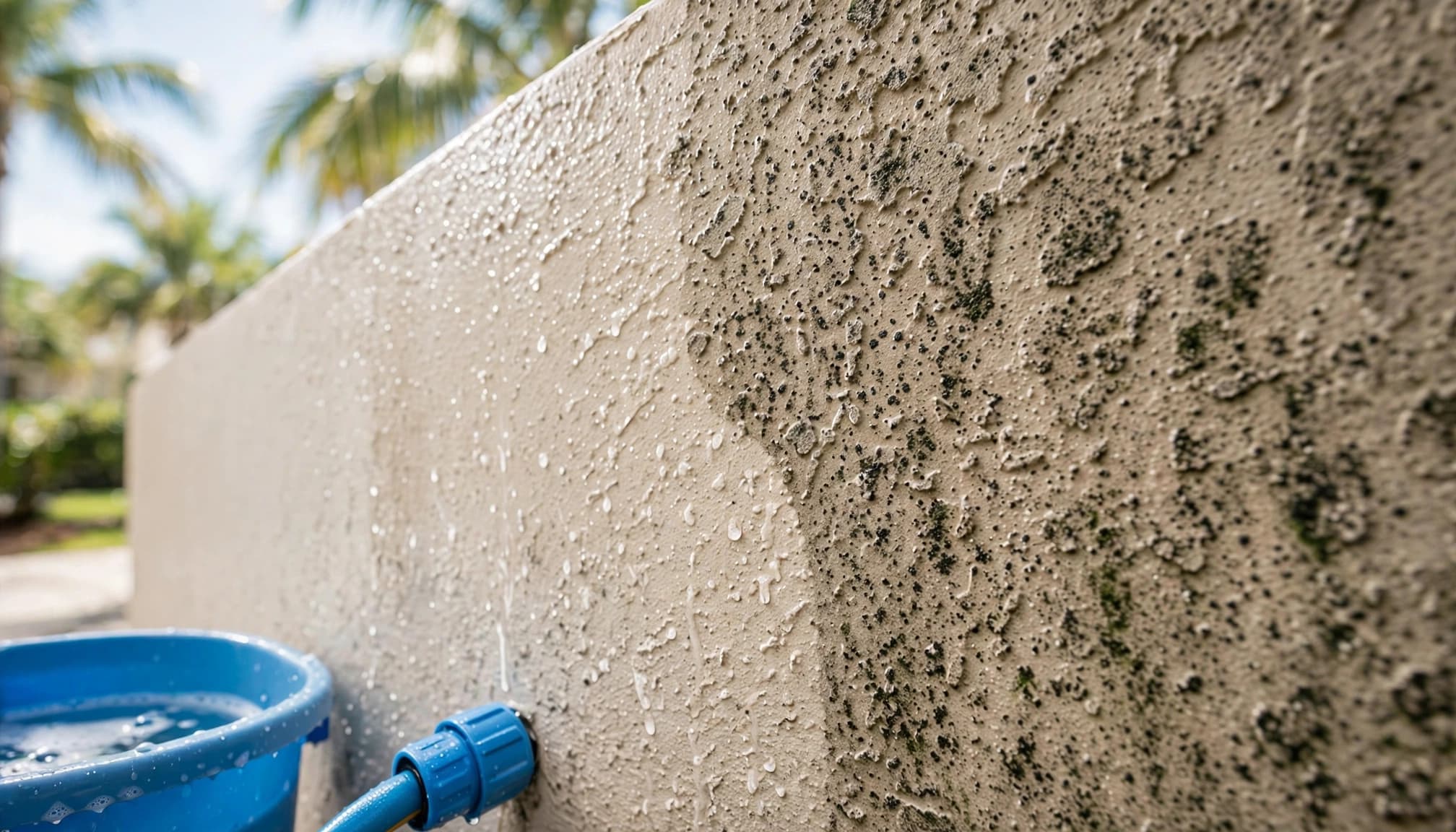
- Wet and test a small section. Use a gentle hose spray, avoiding cracks and openings. Apply the cleaner to a discreet part of the stucco surface and check the result before treating the visible stain.
- Apply the solution gently. Use the cleaning solution as directed on its label. Don’t add dish soap or baking soda to a labeled product or use an untested homemade mixture. Give it time to work, following the label’s contact-time instructions.
- Brush only where needed. Move a soft brush lightly across the textured surface, and avoid abrasive tools such as a wire brush. If the coating flakes or stucco comes loose, stop and reassess the wall.
- Rinse thoroughly. When cleaning stucco, use clean water at low pressure and direct it down the wall, away from joints, openings, and damaged areas. Don’t pressure wash stucco or power wash stucco as a substitute for this gentle process.
Let the section dry enough to judge the result. If discoloration remains, inspect it before repeating the wash. For stucco stain removal, first identify the cause. Rust-colored marks, white mineral deposits, and leak-related stains need different attention than surface mildew. Repeated cleaning won’t correct water entering through a crack.
Should You Pressure Wash Stucco?
A pressure washer can remove surface material along with dirt. When you pressure wash stucco, a narrow, forceful stream may chip a textured finish or push water through cracks and around openings. For a homeowner cleaning mildew before paint, soft washing and a gentle rinse are the safer starting points.
Keep the Rinse Gentle
A garden hose gives you more control around trim and questionable areas, making it a practical way to soft wash stucco. Hold the spray away from openings rather than aiming into them. If you need to power wash stucco to get the wall clean, check whether you’re dealing with failing paint or damaged stucco instead of ordinary buildup.
Identify EIFS Before Using Equipment
Some walls that look like traditional stucco are exterior insulation and finish systems, often called EIFS. Their cleaning requirements can differ. EIFS maintenance instructions describe low-pressure washing under 500 psi with a fan tip held at least 12 inches from the surface. That’s EIFS-specific guidance, not a pressure setting for every stucco wall.
If you don’t know what finish you have, don’t guess with a pressure washer. The condition of the wall matters as much as the equipment setting.
Let the Wall Dry Before Repairing and Repainting
A wall can look dry on the surface while its texture and repaired areas still hold moisture. Give cleaned stucco time to air-dry, then check shaded sections, corners, and areas beneath eaves. Recent rain and humid weather can extend the wait.
Finish the Surface Preparation
Before repainting exterior stucco, make sure the stucco surface is completely dry. Once the wall is clean and its condition is clear, address cracks, loose material, and failing paint. Repairs need a stable surface and enough curing time before coating, so follow product instructions rather than treating cleaning day as painting day.
Curb Appeal Pros includes mildew removal, surface preparation, crack sealing, and priming where needed in its exterior painting process. When a repair changes the wall’s texture, matching the surrounding finish also matters. Paint alone won’t hide a poorly blended patch.
Reduce the Conditions That Help Mildew Return
Cleaning removes what you can see; keeping the wall drier helps limit another buildup. Trim plants that crowd the stucco so air can move around the surface. Keep irrigation spray off the wall where practical, and look for overflowing gutters or water collecting near the base.
After heavy rain, check previously stained areas for mold on stucco. If the same patch stays damp or darkens again, the cause may be more than shade and humidity. The EPA’s mold and moisture guidance makes moisture control central to managing recurring growth.
Make a habit of looking over the exterior during routine yard care and before each repaint. That lets you spot new cracks, failed caulking, or peeling paint while the affected area is still small.
When Curb Appeal Pros Should Take a Look
A small patch of surface mildew on sound stucco is different from staining across a two-story wall or around damaged windows. Height, widespread loose paint, recurring stains, and water intrusion can complicate work on exterior stucco.
Curb Appeal Pros can inspect the affected area and assess whether it calls for repair, professional cleaning, or repaint preparation. An estimate can clarify the scope of repairs and painting for a home, condo, or commercial property before work begins. The team also handles stucco repair and texturing in Palm Harbor and surrounding communities.
Key Takeaways
- Inspect cracks, loose stucco, and moisture stains before washing.
- Start with a suitable mild cleaner, a soft brush, and low-pressure rinsing.
- Follow product labels for safety and contact time; never mix bleach with other cleaners.
- Let the wall dry, repair damaged areas, and prepare the surface before painting.
Frequently Asked Questions
Can You Paint Over a Stain After It Dries?
Check what caused the stain first. If mildew remains on the surface, clean it before painting. If the mark comes from water moving through the wall, address that source and any damaged stucco. A dry-looking stain doesn’t prove the wall is ready for paint.
How Long Should a Stucco Cleaner Sit Before Rinsing?
Follow the stucco cleaner label for contact time and rinsing, and don’t let the cleaning solution dry on the surface. A pressure washer doesn’t change the required contact time, and rinsing should remain gentle. Work in small sections, since timing depends on the product and wall finish.
Will a Homemade Borax Mix Clean Stucco?
Borax, baking soda, and dish soap appear in household cleaning recipes, but none is a universally suitable stucco-cleaning mix for every finish or paint coating. Start with a mild detergent labeled for the surface, and follow product directions if considering another cleaner. Test a small area first, and never mix cleaning chemicals.
How Often Should You Check Exterior Stucco?
Look it over during regular property upkeep, after storms, and before repainting. Pay closer attention to areas that stay shaded or receive sprinkler spray. Schedule an assessment when you find loose material, spreading cracks, or stains that return soon after cleaning.
Clean Stucco Is the Start of a Lasting Paint Job
Mildew removal works best when you clean the wall gently and assess its condition. Cleaning, drying, and repairing damaged stucco give the new coating a sound surface.
If cracks or recurring stains are part of your project, an estimate for your home, condo, or commercial property can be requested from Curb Appeal Pros. Call (727) 222 – 1399.