
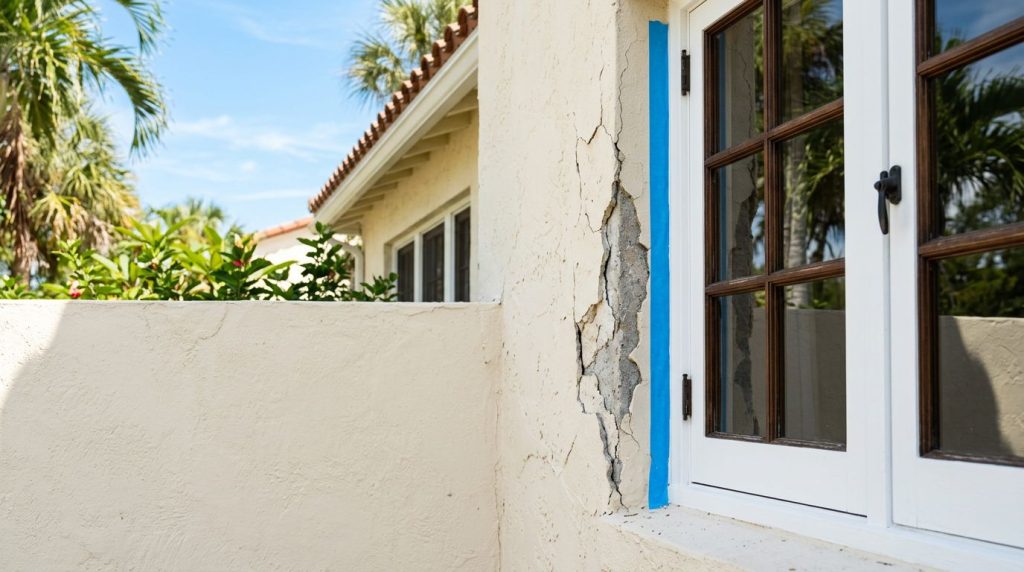
A crack beside a window can look minor until nearby paint starts to bubble. For a Dunedin, Florida property, an estimate for stucco repair and painting options can be requested from Curb Appeal Pro.
Repairing the cause matters as much as restoring your home exterior. Curb Appeal Pro can assess residential and commercial projects in Dunedin, from homes and condos to commercial properties across Pinellas County.
Signs of Stucco Damage Worth a Closer Look
Stucco damage doesn’t always begin with a large crack. Changes in texture, color, or sound can point to an area that needs attention, but they don’t confirm a hidden problem remotely.
Cracks and Loose Areas
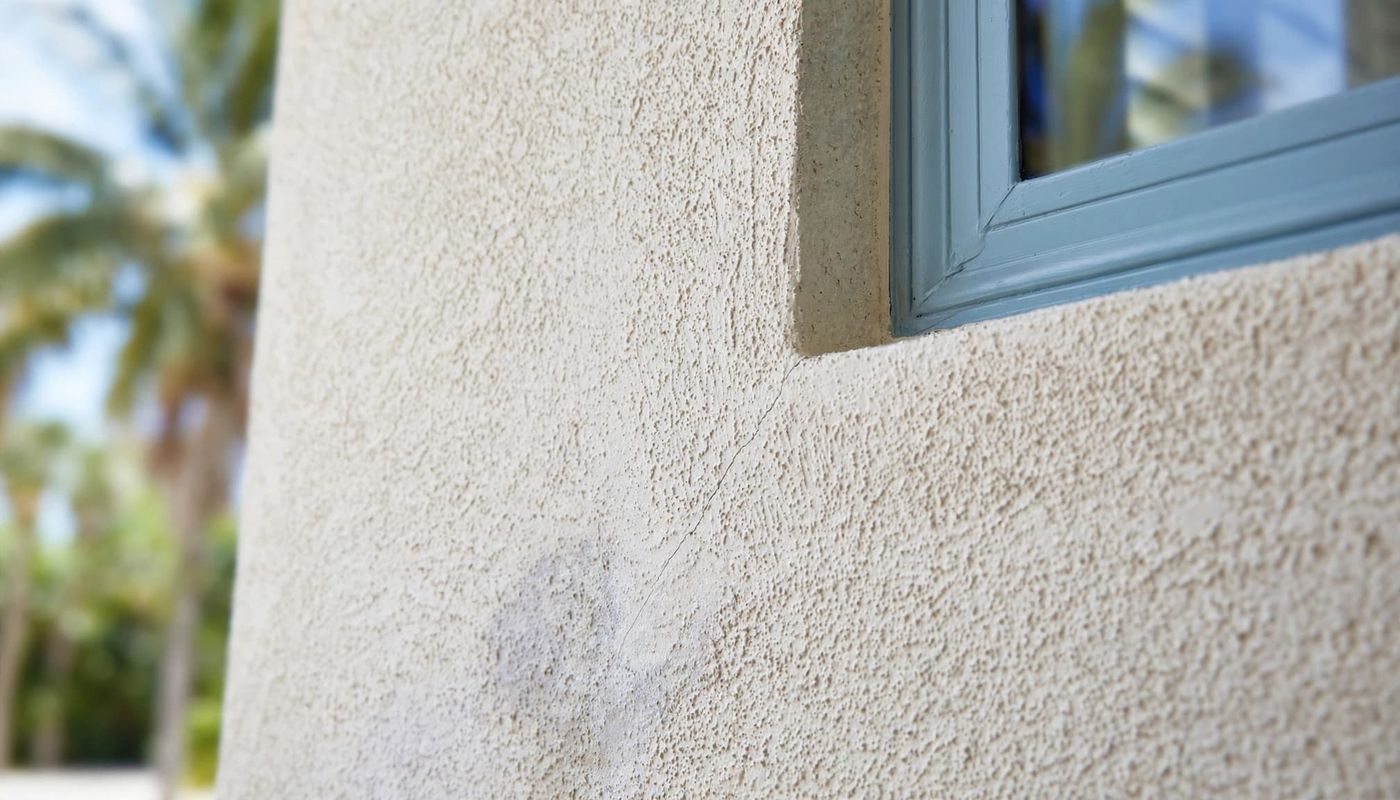
A thin, isolated crack may need a different repair than an area separated from the material beneath it. Watch for widening stucco cracks, crumbling edges, bulges, or pieces that come away with a light touch. A hollow sound when you gently tap the wall can also suggest loose material.
Pay attention to where the damage appears. Cracks near windows, doors, wall openings, and rooflines deserve careful inspection because water can enter through gaps in those areas. If a patch has cracked again, the movement or moisture behind it may still be present.
Stains and Peeling Paint
Discoloration, bubbling or peeling paint, or a damp-looking patch can signal water damage or possible water entry. Check nearby gutters, downspouts, sprinklers, and window edges for possible sources. Interior staining on the other side of the wall raises the urgency.
Take a photo and note whether the mark changes after rain or sprinkler use. That record gives Curb Appeal Pros useful context when assessing the exterior. Avoid covering a persistent stain with paint before addressing its source.
How Dunedin Conditions Affect Exterior Stucco
In Pinellas County, a humid, coastal setting brings wind-driven rain, strong sun, and repeated moisture exposure. These weather conditions can affect stucco and its finish, though not every visible mark comes from coastal exposure. Water can enter through an open crack, roof edge, window joint, or sprinkler aimed at the exterior, potentially causing water damage. Once the wall dries, the visible mark may remain, making the original entry point harder to spot.
Exterior plastering needs a properly prepared surface before paint is applied. Paint helps protect it, but it won’t correct loose stucco or stop water entering through an unresolved opening. Repeated wetting can also shorten the life of a cosmetic patch.
After a storm, inspect walls from the ground. Look below windows, along trim, and around places where the stucco meets another material. If you see new damage, photograph it before cleaning or painting. Property managers can use those photos to track whether an area is getting worse between routine inspections.
Stucco Repair Dunedin, FL: How the Work Proceeds
The right repair depends on what’s beneath the visible damage. Sound exterior plastering needs a stable surface and a plan for any moisture source, not just a smooth outer layer.
Assess the Wall Before Patching
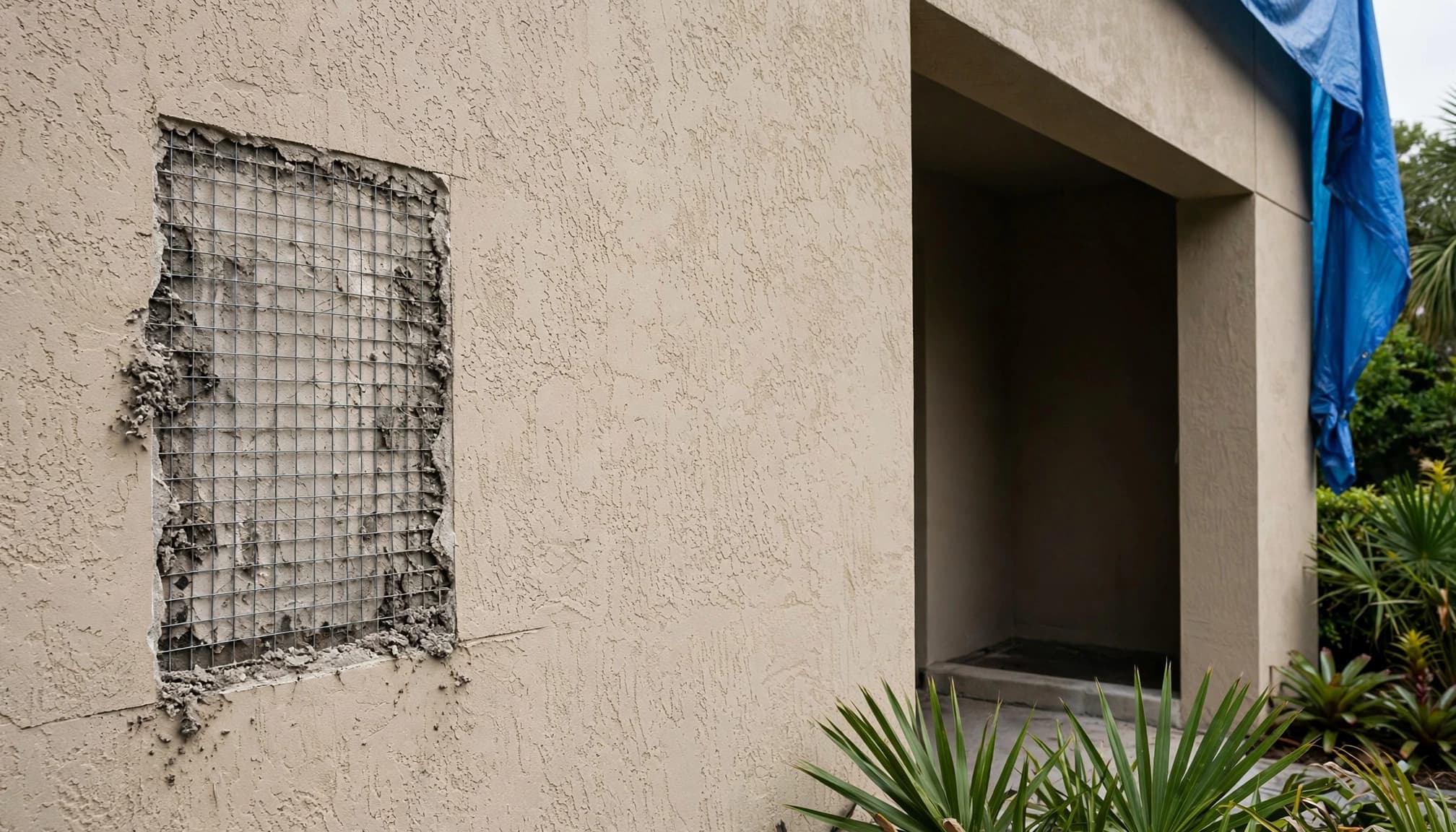
An assessment should identify the damaged area, check whether nearby stucco is sound, and look for conditions that could make the problem return. The approach may differ between stucco on masonry and stucco over a framed wall. Terms such as exterior wall cladding and exterior rendering describe different aspects of a wall, so the actual substrate and finish need to be checked. A professional plasterer can use those findings to recommend suitable plastering services.
Structural concerns need a separate evaluation, not a cosmetic cover-up. Florida Building Commission guidance on building deterioration calls for repair when structural deterioration is present. A visible crack alone doesn’t establish structural damage, so an exterior plasterer should assess the condition on site.
Remove Unsound Material and Rebuild
Where stucco has loosened, patching over it leaves a weak base. Remove unsound material to a firm boundary, then rebuild with materials suited to the existing wall. The needed depth and area become clear only after inspection.
A small, sound crack may need a simpler repair, while a soft or separating area can extend beyond what first appears damaged. Curb Appeal Pros’ stucco preparation and repair services address the wall before the finishing work begins.
Matching Texture and Paint After a Repair
A patch can be sound and still catch your eye every time you pull into the driveway. Texture, paint condition, and lighting all affect how well it blends with the home exterior.

Recreate the Existing Texture
Florida exteriors have a range of stucco finishes, from relatively smooth surfaces to pronounced knockdown patterns. Matching the surrounding texture takes careful exterior plastering, with attention to its scale and direction. That’s easier to judge by looking at the wall in daylight from several angles, rather than examining only the damaged spot up close.
Texture matching may involve a sample area before the visible patch is finished. On a broad wall, even a slight difference can stand out. Corners or other natural stopping points can sometimes help define a sensible finish area.
Plan the Paint Finish
After stucco repair, paint selection can affect how well the patch blends. A perfect color match is difficult when existing paint has weathered. Even paint from the original color formula may look different beside an older coating. As a result, painting the full wall plane may produce a more consistent appearance than touching up the patch alone.
Surface preparation also affects the final exterior finish. The repaired area must be ready for coating, and the surrounding paint must be sound. If the rest of your exterior is due for attention, Curb Appeal Pros’ exterior house painting services can be considered alongside the stucco work.
When a Small Patch Isn’t Enough
A tiny, stable surface flaw may seem like a weekend project. But stucco damage, loose areas, spreading cracks, or signs of moisture damage call for a closer assessment rather than another patch. High walls and damage around openings also raise access and water-entry concerns.
Recurring damage is a reason to reassess the area, not repeat the same patch. Bubbling paint or returning stains can be signs of water damage, though they don’t confirm the source. A new coating may hide the symptom briefly while the underlying condition continues.
Don’t disturb a broad area just to see how far a crack extends. Document what you can safely see from the ground, including its location and nearby staining. That information helps Curb Appeal Pros define the needed scope, whether it fits a surface repair or handyman services. If inspection supports a broader project, the work may include restoration services.
What Shapes a Stucco Repair Estimate?
A useful estimate starts with the actual condition of the wall. Two cracks of similar length can require different work if one sits in sound stucco and the other borders a loose, damp area.
Scope, Access, and Finish
The area to be repaired, depth of damage, wall height, and ease of access all affect the exterior plastering work involved. So do texture matching and painting. A small patch on an easily reached wall is a different project from a repair around an upper-story window.
Ask what the estimate includes: removal of unsound material, repair preparation, texture, coating, and cleanup. Ask which plastering contractors will assess the wall and whether a professional plasterer will perform the work. Where applicable, verify that the contractor is licensed and insured. If moisture may be entering elsewhere, discuss how that concern will be handled before approving a finish-only repair. An on-site assessment is the reliable way to define the scope; a photo may not show what’s loose beneath the surface.
Scheduling and Property Needs
Property maintenance planning for residential and commercial properties can affect scheduling. For an occupied home, ask how the work area will be protected and when access is needed. Condo managers may need to coordinate building approvals and resident notices. At a commercial property, entryways, parking areas, and business hours can affect the plan.
Curb Appeal Pro lists painting and property repair services for homes and businesses across Pinellas County. You can review customer reviews for Curb Appeal Pro when considering service. To discuss a Dunedin property’s condition, Call (727) 222 – 1399.
Planning Repairs for Condos and Commercial Properties
On a single-family home, you can often inspect the full exterior in one walkaround. In Pinellas County, a condo or commercial building calls for a wider view of the property. Similar stains or cracks on several units may point to a shared detail, such as a repeated window condition or drainage issue.
Before work begins, identify who authorizes repairs, painting, and exterior plastering. A condo association may control exterior finishes, while a commercial lease may divide property maintenance responsibilities between parties. Confirm these requirements before choosing a color or scheduling access. Where applicable, verify that plastering contractors are licensed and insured.
For occupied buildings, good planning also limits disruption. Keep walkways clear, identify areas needing protection, arrange access to the wall being repaired, and share the schedule with residents. Clear photos and a written scope help property managers track the work and explain it to owners or residents.
Key Takeaways for Dunedin Property Owners
- Check cracks for loose edges, staining, or paint bubbles before treating them as cosmetic.
- Address a likely water source before finishing a patch; otherwise, the damage may return.
- Discuss texture and paint together if you want the repaired area to blend with the wall.
- Request a scope based on the wall’s condition, access needs, and property requirements.
Frequently Asked Questions
Why Should I Repair a Stucco Crack Promptly?
An open crack can provide a path for water, especially near a window, door, or wall joint. Early attention also makes it easier to document when the damage first appeared. A crack doesn’t automatically mean hidden water damage, but waiting until paint peels or the wall feels loose can increase the work required. Have a changing or recurring crack assessed before covering it.
Can Stucco Be Repaired Without Painting the Whole Building?
Yes, some repairs can receive a localized paint touch-up. Whether it blends depends on the existing color, weathering, texture, and location. A patch in the middle of a sun-exposed wall may remain visible, even with a close paint match. Painting the wall plane is sometimes the better choice for a uniform finish; the entire building doesn’t necessarily need repainting.
What Should I Have Ready When Requesting an Estimate?
Note where the damage is, when you noticed it, and whether it changes after rain or sprinkler use. Photos of the affected wall and nearby windows or roof edges can help start the conversation. For a condo or commercial property, have any exterior-color rules and access requirements available. The final scope should follow an assessment of the wall itself.
A Sound Repair Starts Below the Surface
That small crack beside a window deserves more than a quick coat of paint if water or loose stucco sits behind it. A lasting result starts with assessing the wall and preparing it for exterior plastering. Then the exterior finish can be planned to suit the surrounding surface.
An estimate for stucco repair in Dunedin can be requested from Curb Appeal Pro, along with a discussion about painting the repaired surface.