
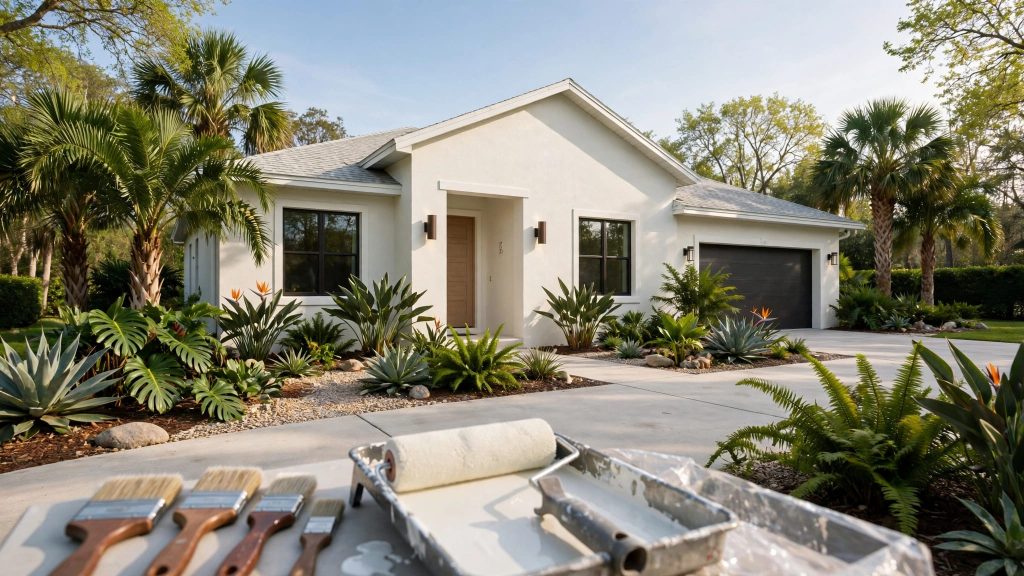
Painting your home exterior in Florida feels like a high-stakes gamble when sudden afternoon thunderstorms roll in and thick humidity lingers for months. You want a fresh coat that stands up to the elements, but you have probably heard that local weather ruins exterior paint if you time it wrong. Finding the best time of year to paint a house in Florida requires looking past simple monthly calendars and understanding temperature, moisture, and surface conditions.
In Florida, spring and fall are the sweet spots for exterior painting. Late spring and early fall are often ideal because temperatures sit comfortably in the sixties and seventies while the air remains relatively dry.
Key Takeaways
- Spring and fall offer the most stable temperature and humidity ranges for exterior house painting.
- Surface preparation, including stucco repair and pressure washing, matters more than the calendar date.
- High heat above ninety degrees and sudden summer storms cause fresh paint to blister, peel, or wash away.
- Interior painting and climate-controlled touch-ups can happen successfully during any month of the year.
Why Florida’s Weather Makes Timing Such a Big Deal
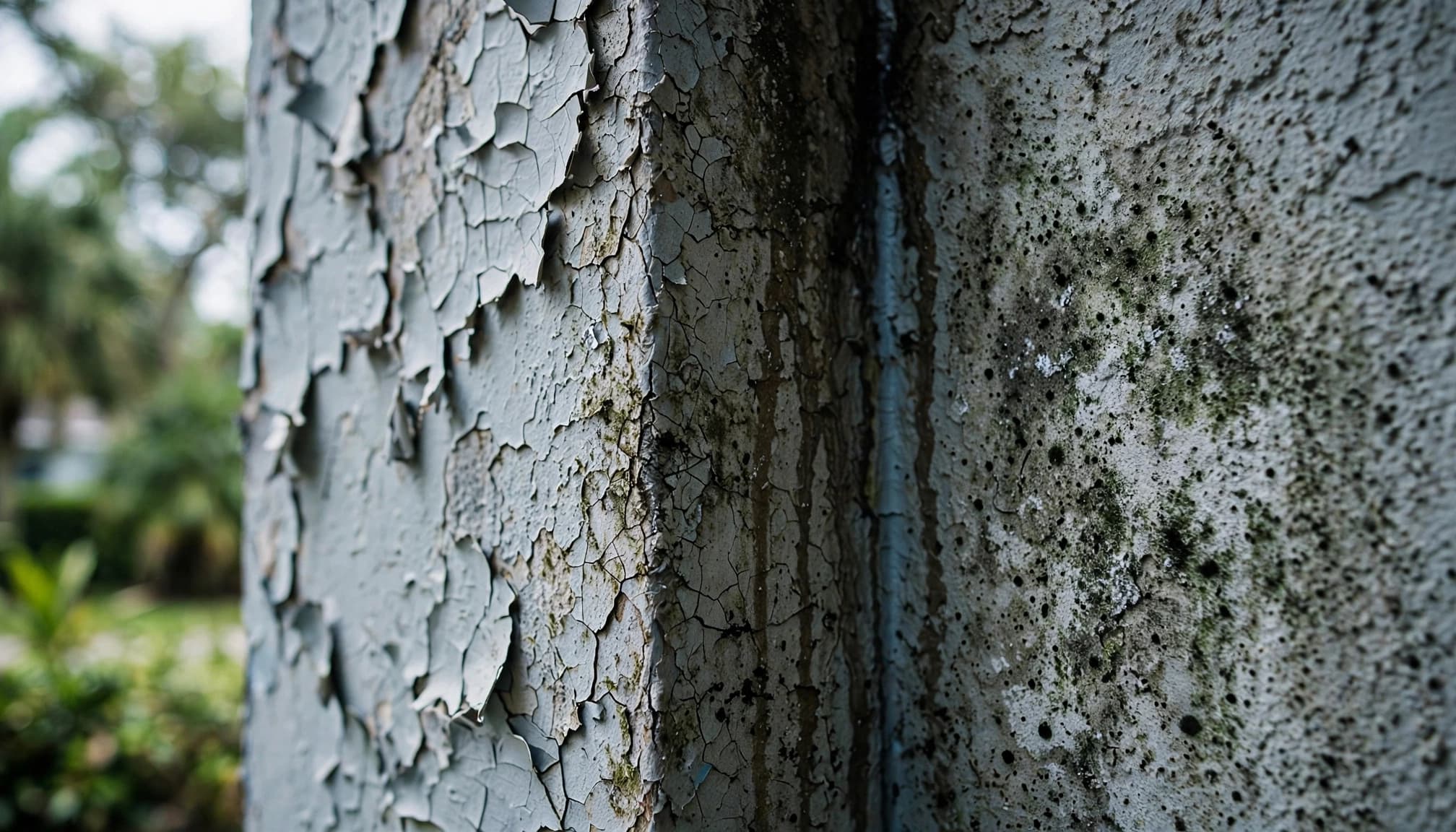
Paint needs steady conditions for curing and proper bonding. Mild conditions are rare year-round, so timing matters. High humidity slows drying and traps moisture under the paint film, causing blistering, peeling, and mildew. Heavy summer rain can wash off or streak a fresh coat before it cures, wasting days of work.
Heat above 90 degrees and direct sun can make paint dry too quickly, weakening paint adhesion and leaving harsh brush marks on siding. Coastal salt air in Palm Harbor and Clearwater also wears down exterior surfaces.
Local climate tracking from the National Weather Service Tampa Bay climate guidance shows how quickly storms develop across Pinellas and Hillsborough counties. For a smooth project without weather delays, an expert opinion can help. Curb Appeal Pros and their team, including Joey Vumbaco and Jay McGarrity, offer free estimates and can tell you what your property needs.
The Best Time of Year to Paint a House in Florida
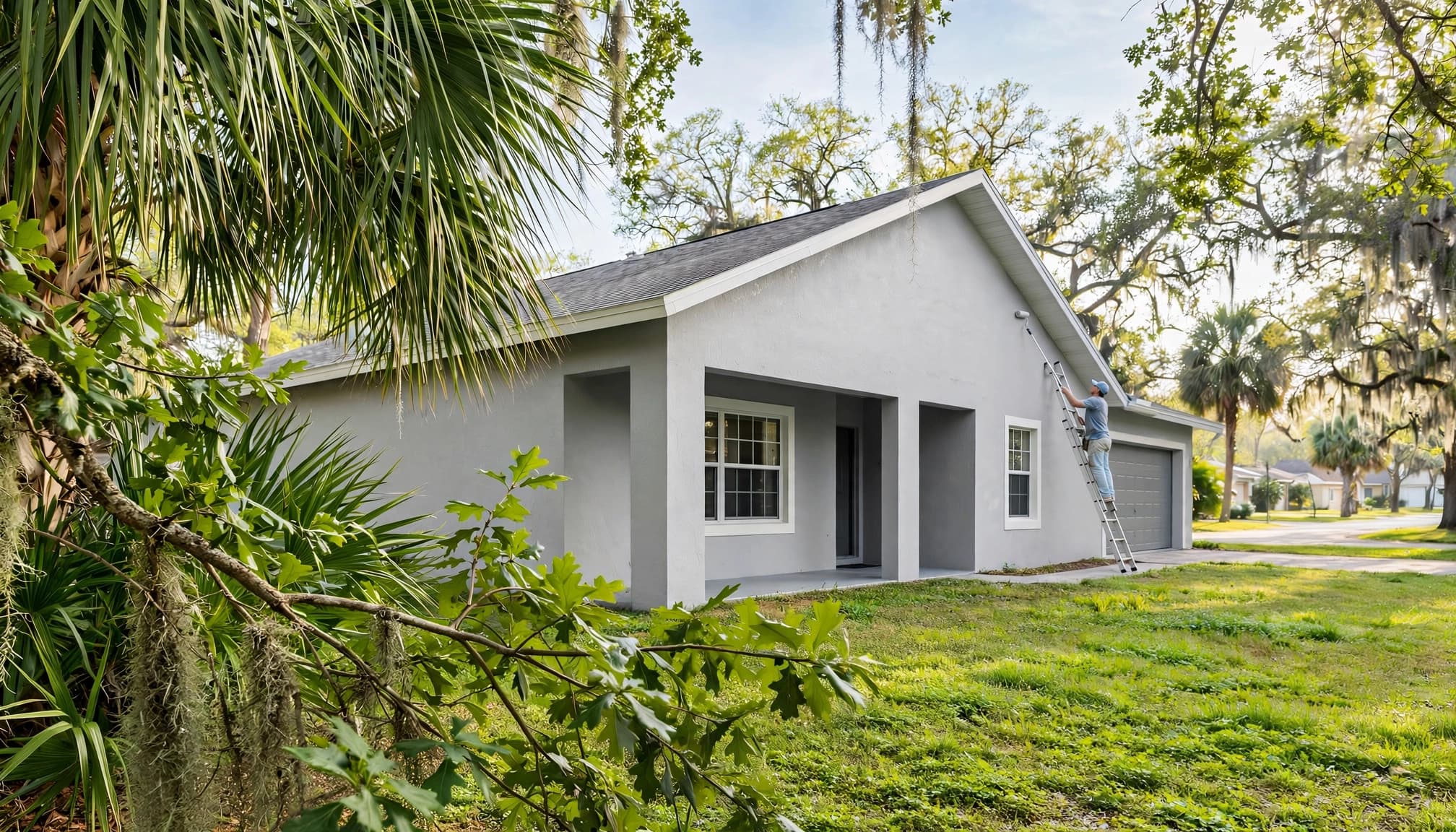
Planning an exterior painting schedule in Florida starts with understanding the seasons. Each part of the year brings distinct advantages and challenges for property owners considering exterior house painting in Palm Harbor.
Spring: The Sweet Spot for Exterior Painting
Spring is one of the best seasons for exterior projects. Temperatures across the Tampa Bay area typically stay in the comfortable sixties and seventies. Rain is less frequent than later in the year, giving paint crews more uninterrupted days to prep and coat your home.
Fall: Why October Through November Works So Well
Fall offers weather conditions that rival those earlier in the year. By October and November, tropical storm activity drops and humidity levels start to decline. Daytime temperatures cool to a manageable range, and afternoon downpours happen less often. This window gives exterior coatings time to cure evenly without excessive heat stress.
Summer: Possible, but You Have to Work Around the Heat and Storms
Summer painting is doable, but it requires careful coordination. Experienced crews start early to beat the midday heat and keep a close eye on weather radar. Direct sun makes paint skin over too fast, so working in the shade of the building helps. During the wet summer months, expect occasional weather delays.
Winter: Short Days, Cooler Nights, and What Still Gets Done
Winter works well for exteriors when daytime temperatures stay above the manufacturer’s minimum. Most latex coatings require temperatures of fifty degrees and rising. Shorter daylight hours give crews fewer working hours each day, but cooler air makes physical labor easier on the job site.
Conditions That Matter More Than the Calendar
The calendar is a helpful guide, but the actual day and the condition of your exterior decide how well the job turns out.
Temperature, Humidity, and the Numbers to Watch
Most exterior latex paints need an air and surface temperature between 50 and 85 degrees. Keep humidity below 70 percent, with no rain forecast for at least 24 hours after application. High humidity can slow curing, so check the dew point before painting. Leave a safe margin above the dew point to prevent condensation on fresh paint. A morning application avoids midday heat and direct sun.
It Depends on What’s Being Painted (Stucco, Wood, or Vinyl)
Florida stucco and masonry hold moisture longer, so allow extra drying time after rain. Wood trim absorbs coatings differently than concrete. Vinyl siding also has limits, since dark colors can cause it to warp in hot weather.
How Florida Homes Are Prepped Before Paint Goes On
In Florida, thorough surface preparation makes painting possible in any season. Crews use pressure washing to clean the exterior, then patch cracks, remove mildew, caulk gaps, and prime bare spots before applying paint. Skipping prep work is a common reason paint jobs fail early.
Signs You Should Repaint Now Instead of Waiting for the Ideal Season
Sometimes waiting for the ideal month causes more harm than good. You should inspect your exterior for warning signs that demand immediate attention. Watch for peeling paint, chalky residue on the surface, blistering bubbles, fading color, cracked caulk, and water stains near the roofline or window frames.
General maintenance guidelines for Tampa Bay homes suggest repainting roughly every five years, but heavy sun exposure, salt air, and lack of shade can move that timeline forward. A home facing harsh afternoon sun needs attention sooner. Delaying repairs on damaged siding or stucco costs more in the long run because moisture finds a way inside and expands the damage.
If you notice these warning signs, reach out to schedule a free estimate so an expert can inspect the actual condition of your exterior. Call (727) 222 – 1399 to discuss your property needs with Curb Appeal Pros. Getting professional exterior painting services Palm Harbor protects your investment before minor wear turns into costly structural repairs.
Interior Painting and Stucco Work: Which Season Fits Best
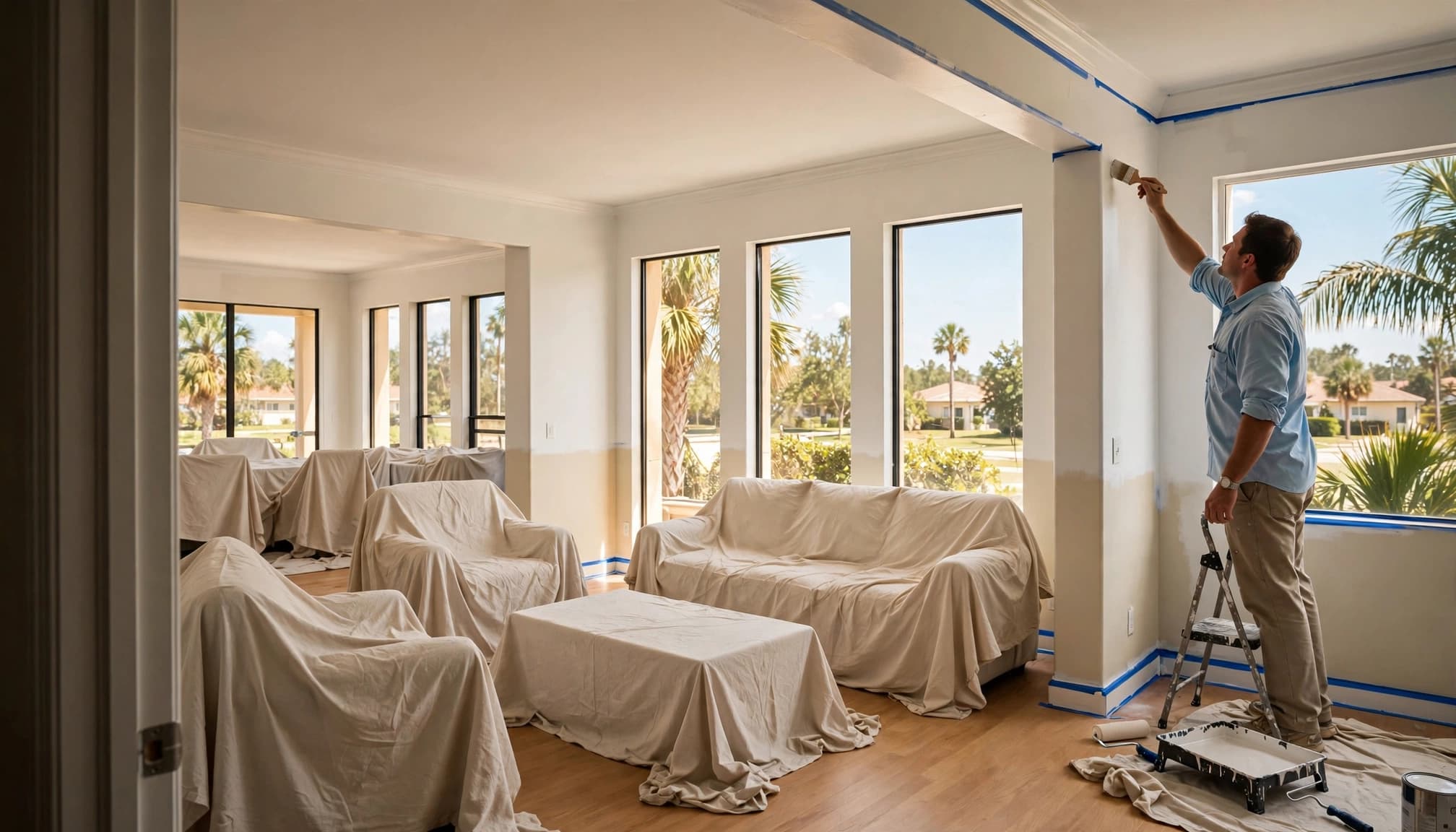
Exterior painting gets the most attention, but interior updates and other repairs in Florida also need careful timing.
Interior Painting Is a Year-Round Project in Tampa Bay
Air conditioning gives painters control over indoor temperature and humidity, so interior painting works year-round. Summer is a fine time for interior updates. Many homeowners schedule work in summer because exterior contractor schedules often open up slightly. For occupied homes, low-VOC paints are a good choice, and low-VOC, low-odor formulas help keep the process comfortable.
Stucco Repair and Painting Need Dry Weather
The material is porous and holds water easily. Repairs, patching, and exterior coatings need dry conditions, usually from late fall through spring, and should wait until surfaces have dried after soaking rain. Surface preparation includes allowing fresh masonry to dry and cure before coating. Curb Appeal Pros handles both interior painting and stucco repair, so you can plan every project on one cohesive schedule.
Frequently Asked Questions
Can I paint my house exterior during the Florida summer?
Yes, you can paint during the summer if crews start early in the morning and watch the weather radar closely. Direct sunlight makes paint dry too quickly, so working in shaded areas of the home helps ensure proper adhesion.
How long should stucco cure before painting?
Traditional cement stucco needs time to dry and should cure for at least twenty-eight days before receiving a finish coat. Check surface moisture to confirm the masonry is dry and ready for primer.
What temperature is too cold for exterior painting?
Most paint manufacturers specify that air and surface temperatures must stay above fifty degrees for at least eight hours after application. Monitor cooler winter nights so the paint cures properly.
How often do Tampa Bay homes need repainting?
Most local homes need exterior repainting every five years because of intense UV rays and heavy rain. Homes with heavy sun exposure or coastal salt air may need attention sooner to maintain proper protection.
Can interior painting be done any time of year?
Interior painting can happen year round in Florida because air conditioning controls indoor temperature and humidity. Low-VOC paint is a good choice for indoor projects, and the warm months are an ideal season for room makeovers while exterior crews manage weather windows.
Conclusion
Spring and fall remain the safest bets for exterior painting in Florida, while summer and winter work successfully with careful preparation and product selection. Interior painting fits into any month of the year thanks to climate control. Take the next step by scheduling a free, no-pressure consultation with Curb Appeal Pros. Backed by over twenty years of local experience and a solid satisfaction guarantee, the team delivers clean and dependable results for your property.